


Wine at Pied à Terre: 35 Years of Fine Wine, Burgundy & Great Bottles
35 Years of Fine Wine at Pied à Terre
You know how things creep up on you? Thirty-five years sounds like a long time. Well, it is a long time and it isn't. The past, the distant past, can seem like yesterday, while reflections from yesterday can somehow feel so far away and difficult to recollect. Maybe that is just an age thing!

Over 35 years, the wine cellar at Pied à Terre has grown from a handful of bottles bought on 30-day credit into one of London's most celebrated collections of fine and rare wine.
Stellar moments stand out and draw reflection, as do dire times, hardship and heartache, each leaving its mark on a life well lived in the name of hospitality.
A life in hospitality, peppered with moments of beauty brought to life by wine, suppliers, vineyards and the stories that have been enjoyed as part of a 35-year career as owner and front of house of Pied à Terre, has led to the creation of a restaurant with one of the finest wine cellars in London and the UK.
Our wine list at Pied à Terre has been recognised over the years by Wine Spectator, Decanter and wine lovers from around the world, and Pied à Terre was awarded joint first place for its wine offering in 2024 by the industry publication The Drinks Business.
My First Great Restaurant Experience: Le Gavroche, 1982
Where did it all start? As an 18-year-old catering student, I saved up my £5 notes to take my sister to a top restaurant for her 21st birthday. Faxes were sent and a table secured – this was for memories she would treasure for many years.
My recollections are of awe, discomfort in a badly fitting suit and the restaurant manager, Silvano, now a great friend, ticking me off for attempting to relieve myself of said suit jacket. That was 1982, and the restaurant was Le Gavroche, London's longest-standing Michelin-starred restaurant for decades.
Whilst I was taken aback by the price of a gin and tonic at the scandalous price of £3.50, and a souvenir menu copy at £7.50, it was signed and looked great back at Blackpool Catering College. My thinking was two birds, one stone: I treat Jenny, my sister, but I get to experience one of the best restaurants in the UK at the time.
We each drank a glass of house white. I don't recollect what it was or the price – the G&T had frightened me half to death! This was a cash experience, with no back-up credit card or cheque book. Prudence was the order of the day.
Who could have guessed that, when Le Gavroche closed in January 2024, Pied à Terre would take up the baton as London's longest-enduring Michelin-starred restaurants, with a gaggle of stars over 35 years?
Le Manoir & the Wines That Started It All
I digress – this was meant to be about wine!
So, enter 1986, Le Manoir aux Quat'Saisons and the Pouilly-Fuissé and Pouilly-Fumé moment. A spotty, callow youth had answered an advert for assistant head waiter at the very serious Le Manoir, and there began the real journey.
Pascal and Hervé talked and tasted wine with every breath, and enjoyed talking to me as it improved their English. They were an amazing duo, and I thank them for their patience.
They were the sommelier team at Le Manoir aux Quat'Saisons in 1986. I had joined the front-of-house team that July, fresh out of catering college and work experience at The Box Tree in Ilkley, West Yorkshire, then a two-Michelin-starred establishment.
Pouilly-Fumé vs Pouilly-Fuissé: What's the Difference?
I just couldn't understand why these wines with such similar names were so different – and the grape varieties... how do you know what they are?
Just for the record: Pouilly-Fumé is Sauvignon Blanc, while Pouilly-Fuissé is Chardonnay.
I have some library stock still available from the amazing Didier Dagueneau: Blanc Fumé 2005, Pur Sang 2005, Silex 2005 and the wonderful Clos de Calvaire 2023, also from the Dagueneau family, all sourced from the agents and kept in meticulous condition.
Pouilly-Fuissé is less well served from our library stock, but we have three wonderful examples: Guerrin Vieilles Vignes, Leflaive and Guffens-Heynen.
By the end of my first six months, I had a keen interest. I was smitten by the vine and learning every day. There simply is no easy answer, and much information had to be learned and stored. That is how it is with French wine!
Opening Pied à Terre & Buying Wine on Credit

Pied à Terre, my first child, opened in 1991 on a shoestring. My first chef partner, Richard Neat, had just finished working for Joël Robuchon at Jamin restaurant in Paris and then took a position with Marco Pierre White at Harvey's as head chef, with Gordon Ramsay as his sous chef.
Richard and I found 34 Charlotte Street and the journey began.
I was tasked with creating the wine list but had no money to buy wine. I knew a few suppliers from Le Manoir, and there started my wine-buying experience. Only two suppliers took a risk and gave us 30 days' credit: Domaine Direct and Barbier Wines.
You can see where that journey has led by exploring the current Pied à Terre wine list alongside our seasonal Michelin-starred menus.
The Wine Suppliers Who Took a Chance on Us
Hilary, the co-owner of Domaine Direct, introduced more than just Burgundy. She opened Pandora's box on the great and the good, and here are some of the top hits which we still have in stock:
Domaine Armand Rousseau
Domaine Comte Georges de Vogüé
Domaine Roulot
Coche-Dury – many whites and some amazing reds
Domaine Dujac
Domaine Jean Grivot
Domaine Christian Clerget
Domaine Comte Lafon
Domaine Étienne Sauzet
Domaine Michel Lafarge
Domaine des Lambrays
Domaine Henri Gouges
Domaine Pierre Morey
Domaine Marquis d'Angerville
Domaine Bruno Clair
Domaine Michel Gros
Rhône was very simple and only:
Domaine Jamet
Domaine Clape
Barbier Wines had a wonderful collection of great winemakers, and I recall trying to say no to Georges, the owner and main sales contact. He knew his portfolio and understood what a restaurant needed – an amazing character who we still have the pleasure of working with.
Clos Mogador & the Wines I Could Never Say No To
We still have many vintages of Clos Mogador by René Barbier, a cousin of Georges, the salesman you couldn't say "no" to.
I'm so glad we didn't, our list includes:
Clos Mogador 2002
Clos Mogador 2003
Clos Mogador 2004
Clos Mogador 2005
Clos Mogador 2020
Sign up to the Pied à Terre newsletter if you are interested, as we are planning a Mogador dinner showcasing these vintages in autumn 2026.
Our wine list has over the years been recognised by Wine Spectator, Decanter and, frankly, too many social media wine connoisseurs to mention! It is excellent, it is a thoroughbred and it is stocked from some of the best suppliers and producers worldwide.
My Top Ten Wines at Pied à Terre
I'd like to give a shout-out to my top ten wines, regardless of price and in no particular order:
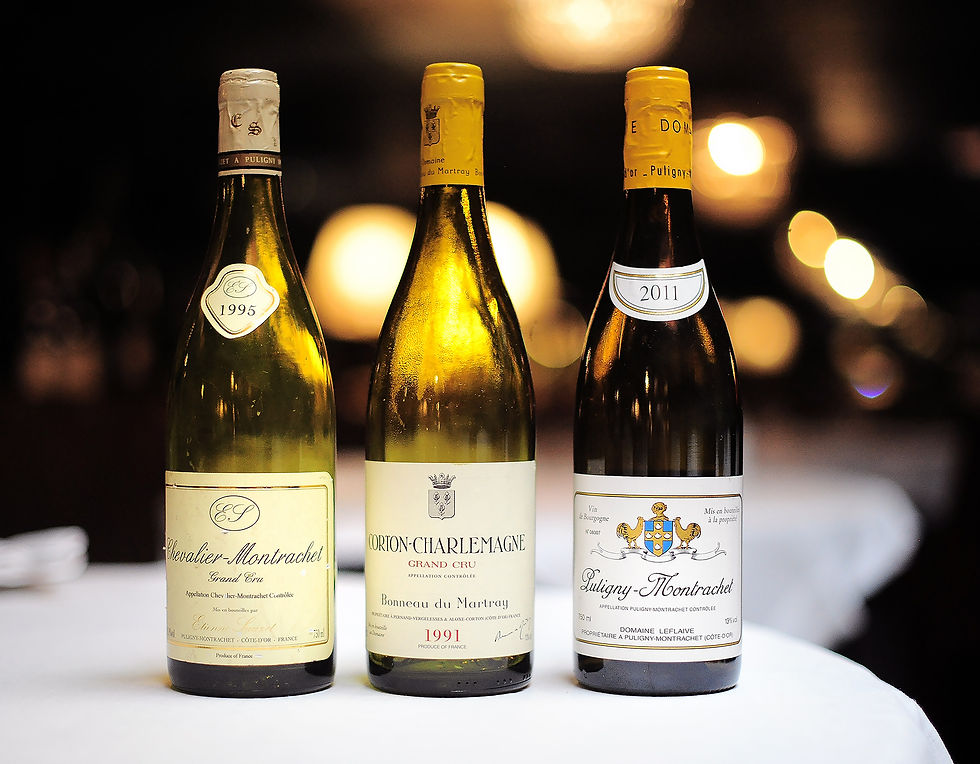
Domaine Roulot – too many vintages to mention
Coche-Dury – 21 different wines
Clos Rougeard Brézé 2007, 2008 and 2009 – a huge surprise
Abbatucci, Corsica – bonkers tasty
Pétrus 1995
DRC La Tâche and Richebourg
Sine Qua Non
Araujo, Napa Valley
Kistler
Clos de Tart

Coche-Dury - Iconic Burgundy producer
The Wine Story Continues: Enter Bruno
In 1993, Bruno arrived at Pied à Terre – madly passionate about wine, particularly Burgundy, and the only member of staff I have ever sacked three times! Those that have experienced Pied à Terre and Bruno will enjoy the next under-the-hood epistle. But that is a story for Part 2.
Somehow, I suspect there may be a story or three to tell...
Perhaps the best way to understand a wine cellar is not to read about it at all, but to come and explore it over lunch or dinner. For anyone looking for a fine wine restaurant in London, Pied à Terre offers the opportunity to explore mature vintages, rare bottles and great wines alongside our tasting menus. Book your table at Pied à Terre and join us for the next chapter of the story.
Because at Pied à Terre, we are only as good as our last meal.
Tip Top
David
David Moore, Founder and Owner of Pied à Terre.


Me ha parecido muy interesante la explicación que compartes en este artículo. La loteria nacional es un tema que despierta muchas consultas, y disponer de información organizada facilita encontrar los datos relevantes. Gracias por ofrecer contenido comprensible y útil para quienes desean mantenerse informados sobre los sorteos.
Thank you for this insightful piece! The 35th-anniversary celebration of Burgundy wine truly brings to mind the space waves we experience throughout life—much like how every drop of wine carries a distinct flavor, every moment is precious and unique. It is wonderful to share such moments with friends over a fine glass of wine!
Congratulations to Pied à Terre on a 35-year journey filled with great wines! I think that exploring Granny 2 in the context of Burgundy really opens up a new direction for wine lovers everywhere. It's interesting to see how these wine lines connect with each other across time and space.
Congratulations to Pied à Terre on celebrating 35 years with such exquisite Burgundies! The blend of tradition and innovation in every bottle is truly admirable. I couldn’t agree more that every glass of wine tells a story—reflecting both the character of the region and the dedication of the winemaker. slope run
Thank you for sharing this wonderful article! It is fascinating to learn about the 35 years of Burgundy wine experiences at Pied à Terre. cookie clicker The carefully selected bottles truly offer exceptional quality and flavor. I hope to have the chance to enjoy one of them!